June 22, 2026
Great Dane Nutrition: Balancing Raw and Kibble for a Healthy Giant
Feeding a Great Dane correctly is one of the most important things you can do for their health and longevity. Giant breeds have unique nutritional requirements that differ significantly from smaller dogs, and getting it right — especially during puppyhood — can have a lasting impact on bone development, joint health, and overall lifespan. This guide covers the key principles of feeding a European Great Dane, including the growing practice of combining raw food with high-quality kibble.
Note: Always consult your veterinarian before making significant changes to your dog’s diet. The information here is intended as general guidance, not veterinary advice.
Why Giant Breed Nutrition Is Different
Great Danes are not just big dogs — they are metabolically and structurally different from medium and small breeds in ways that directly affect their dietary needs. Their rapid growth rate during puppyhood (they can gain two to three pounds per week in early months) makes them vulnerable to developmental orthopedic disease if fed incorrectly. Too much calcium, too many calories, or the wrong calcium-to-phosphorus ratio during growth can lead to conditions like hypertrophic osteodystrophy (HOD) and osteochondrosis (OCD) that cause pain and lasting damage.
The core principles for feeding Great Dane puppies and adults are:
- Controlled caloric intake — no overfeeding, even when they seem hungry
- Appropriate calcium and phosphorus balance (look for AAFCO-approved giant breed formulas)
- Lean protein sources to support muscle without excessive calorie density
- Managed growth rate — Great Danes should grow steadily, not rapidly
High-Quality Kibble: What to Look For
For many Great Dane owners, a high-quality large or giant breed kibble is the foundation of the diet. When selecting a kibble, look for:
- Giant breed or large breed formula — these are specifically formulated with appropriate calcium-to-phosphorus ratios for controlled growth.
- Named meat as the first ingredient — chicken, beef, lamb, or fish, not “meat meal” or “by-products” as the primary protein.
- No grain-free formulas for Great Danes — the FDA has been investigating a potential link between grain-free diets and dilated cardiomyopathy (DCM) in dogs. Until this research is resolved, most veterinary cardiologists recommend avoiding grain-free diets for Great Danes specifically.
- WSAVA-compliant brands — brands that employ full-time veterinary nutritionists, conduct feeding trials, and publish research are held to higher standards. Well-known WSAVA-compliant brands include Royal Canin, Purina Pro Plan, and Hill’s Science Diet.
Raw Feeding for Great Danes
Raw feeding — feeding unprocessed meat, bones, and organs — is growing in popularity among Great Dane owners. Proponents report improvements in coat quality, digestion, energy, and stool consistency. When done correctly and with guidance from a veterinary nutritionist, raw feeding can be nutritionally complete for adult Great Danes.
Key considerations for raw feeding Great Danes:
- Balance over time. A raw diet must provide the correct ratios of muscle meat, bone, and organ over time. A common framework is approximately 70% muscle meat, 10% raw edible bone, 10% liver, and 10% other secreting organs.
- Calcium from bone, not supplements. Raw meaty bones provide bioavailable calcium in a form the body regulates efficiently. Supplementing calcium on top of a raw diet can cause dangerous excess.
- Not recommended for puppies without expert guidance. The calcium and phosphorus balance in raw feeding is difficult to manage precisely during puppyhood. Many experienced Great Dane breeders recommend completing the puppy growth phase on a tested giant breed kibble before transitioning to raw.
- Food safety. Raw meat carries bacterial risks for both dogs and the humans handling their food. Safe handling practices — refrigeration, separate bowls, hand washing — are non-negotiable.
The Mixed Approach: Raw and Kibble Together
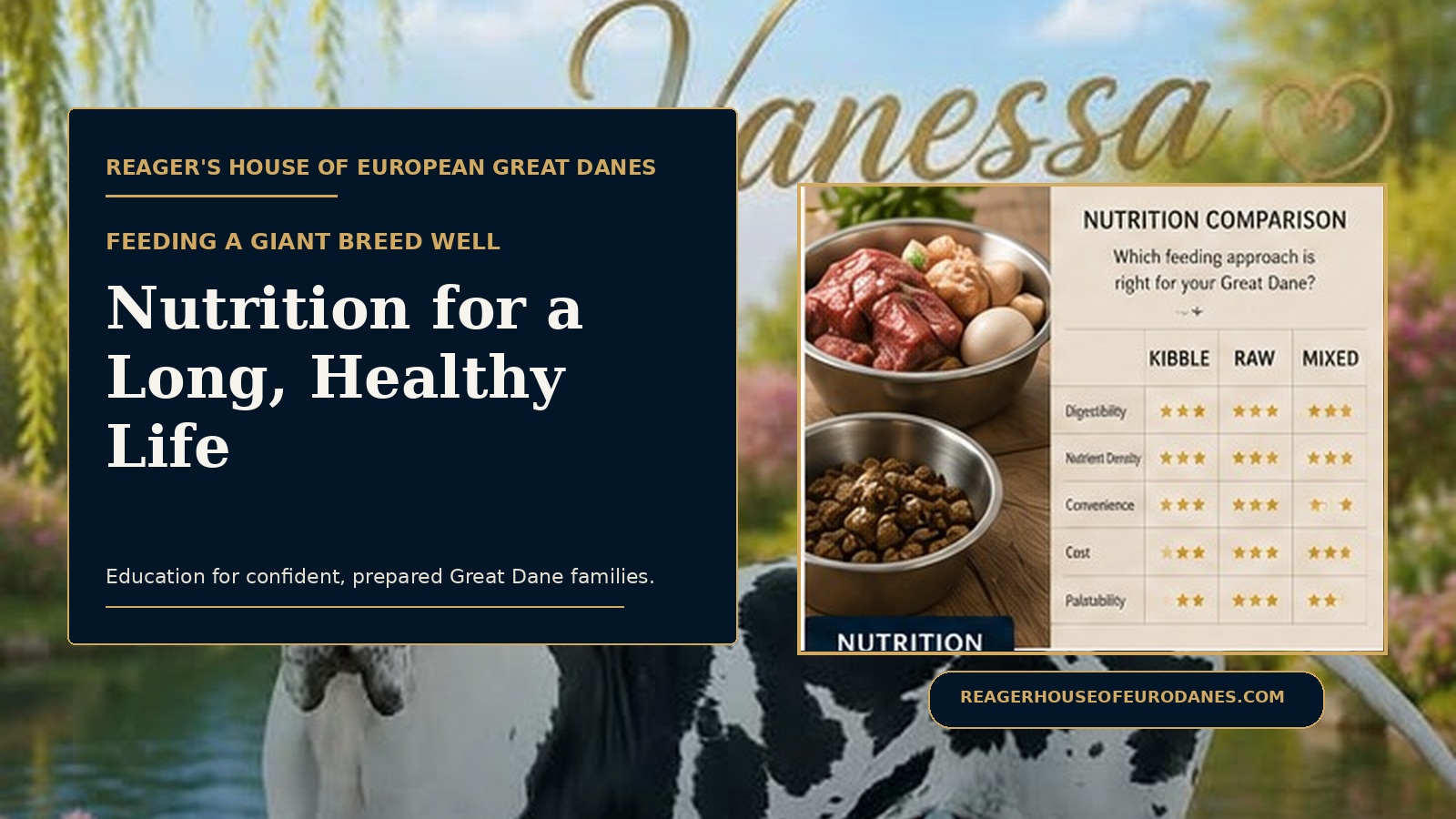
Many Great Dane owners find that mixing raw and kibble offers practical benefits of both approaches. A common strategy is feeding a quality giant breed kibble as the base diet and adding raw proteins — whole eggs, raw chicken thighs, beef heart, or raw sardines — as a protein-dense topper or separate meal.
This approach can improve palatability for picky eaters, add variety, and provide the benefits of whole food proteins without the complexity of managing a fully balanced raw diet from scratch. If you choose to mix, keep portions measured — raw additions should not push daily caloric intake above your dog’s ideal range.
Feeding Frequency and Bloat Prevention
Great Danes are one of the breeds at highest risk for gastric dilatation-volvulus (GDV), commonly known as bloat. Feeding schedule plays a role in prevention. Most Great Dane experts recommend feeding two to three smaller meals per day rather than one large meal, and restricting vigorous exercise for at least one hour before and after eating. We cover bloat in detail in a separate article — it is essential reading for every Great Dane owner.
At Reager’s House, we send every puppy home with a detailed care guide covering feeding schedules, portion sizing, and food transition recommendations. We are always available to answer nutrition questions from our puppy families throughout the dog’s life.
Read our care guide or apply for a puppy to get started.